


Sustainability
We have a specialized team for comprehensive risk management, supporting the identification, assessment, and mitigation of strategic, tactical, and operational risks that may affect the achievement of our objectives. This approach allows us to anticipate potential events and establish effective reduction and mitigation measures.
1
Management levels
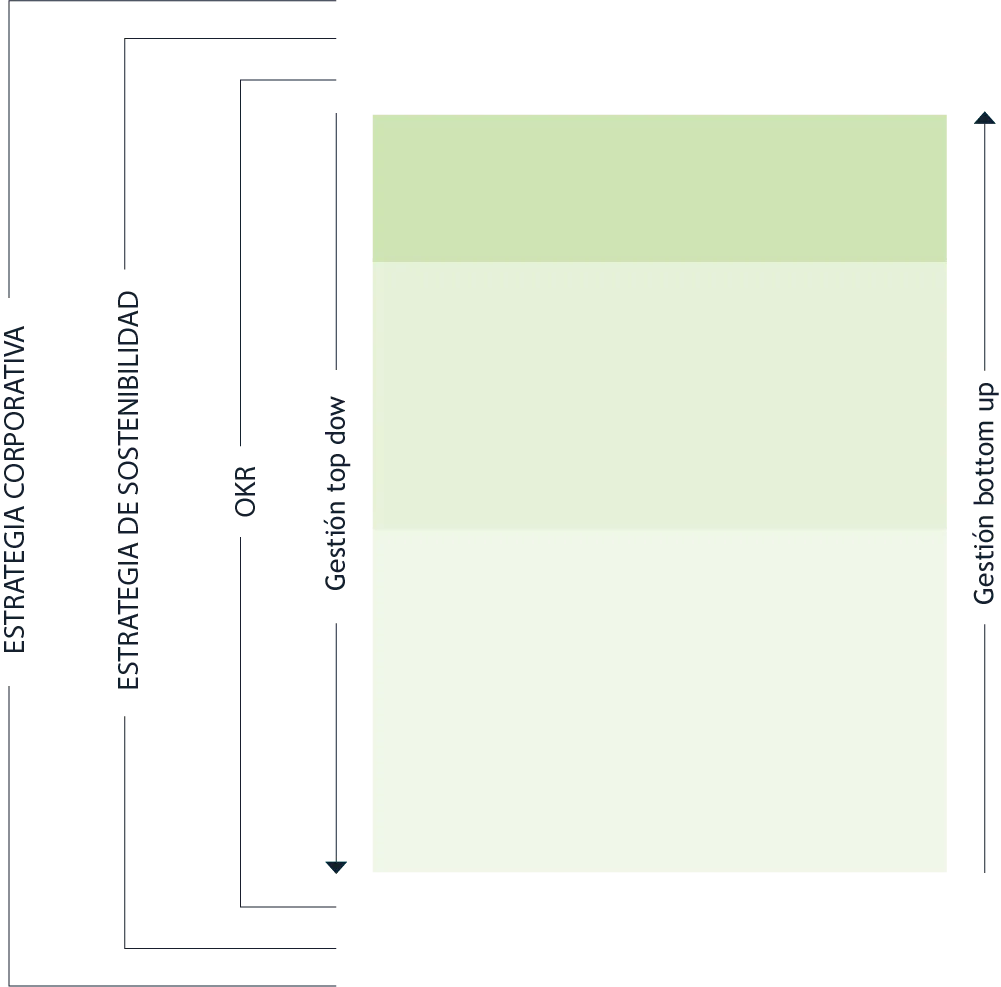
We report risks and threats to the Board of Directors through its Audit, Finance, and Risk Committee, to define action plans and enable timely decision-making by company management.
We conduct risk analysis and assessment across operations, projects, processes, and other company matters, quantifying their impacts. We support escalation processes and the execution of mitigation or prevention plans.
We apply the IRMS methodology to the analysis of risks in processes and facilities, facilitating the formulation, implementation, and monitoring of action plans.
2
Integrated Risk Management System (IRMS)
Our IRMS supports and complements governance, audit, and compliance models. It is based on ISO 31000 and COSO–WBCSD–Enterprise Risk Management standards, aligned with international best practices, supported by the risk management application, and includes the following elements and tools:
1

Materiality analysis

Risk workshops

Digital environment trends and connections

Strategic framework
2
Risk matrices
Value at risk (sensitivity analysis)
Self-assessment tools
3
Risk management application
Corporate insurance program
Adaptation and business continuity plans
4
Reports to senior management
Reports to the Board of Directors
3
Trends and connections
Our trends and connections study is the basis for identifying the key contextual elements that influence strategy and organizational objectives, as well as how we must respond and adapt. It has also become the main reference for identifying and analyzing our strategic and emerging risks.

4
Climate- and nature-related opportunities
We manage opportunities that can drive growth and innovation. Our structured approach enables the identification of improvements, trends, and competitive advantages, aligning actions with corporate objectives. In this context, we recognize climate change as the greatest current challenge, addressing it through green solutions, efficient processes, and access to new markets.
Climate opportunities
Nature-related opportunities
How does it benefit us?
Costs associated with conventional energy are reduced, CO₂ emissions (Scope 2) decrease, energy price stability is improved, and cash flow is strengthened.
How does it benefit us?
Reductions in energy, water, and input consumption can be achieved, productive losses reduced, and cost structures improved.
How does it benefit us?
Drives revenue growth through customer demand for solutions with lower environmental impact, strengthens brand positioning, and can improve profitability.
How does it benefit us?
Savings can be generated in production costs, reduced dependence on resource-intensive inputs, and strengthened operational efficiency and cash flow.
How does it benefit us?
There is lower dependence on conventional inputs and improved operational efficiency through more sustainable management of materials and waste.
How does it benefit us?
Reduction of costs associated with water supply, treatment, discharge, and monitoring; lower exposure to tariff increases or regulatory restrictions.
How does it benefit us?
Structural cost reductions due to lower energy consumption, improved operating margins, and reduced exposure to energy price increases.

Download
In the analysis of climate change–related risks and opportunities, we incorporate the identification and quantification of nature-related risks in our direct operations across each of the geographies where we operate.
Creamos valor construyendo relaciones sólidas que transforman el futuro de la sociedad
Creamos valor a través de nuestro compromiso con el desarrollo responsable y transparente de nuestras actividades.